
Will the pet carrier fit on your shelf?
Check the outside size, folded size and empty weight of a cat or dog carrier before you make room for it.
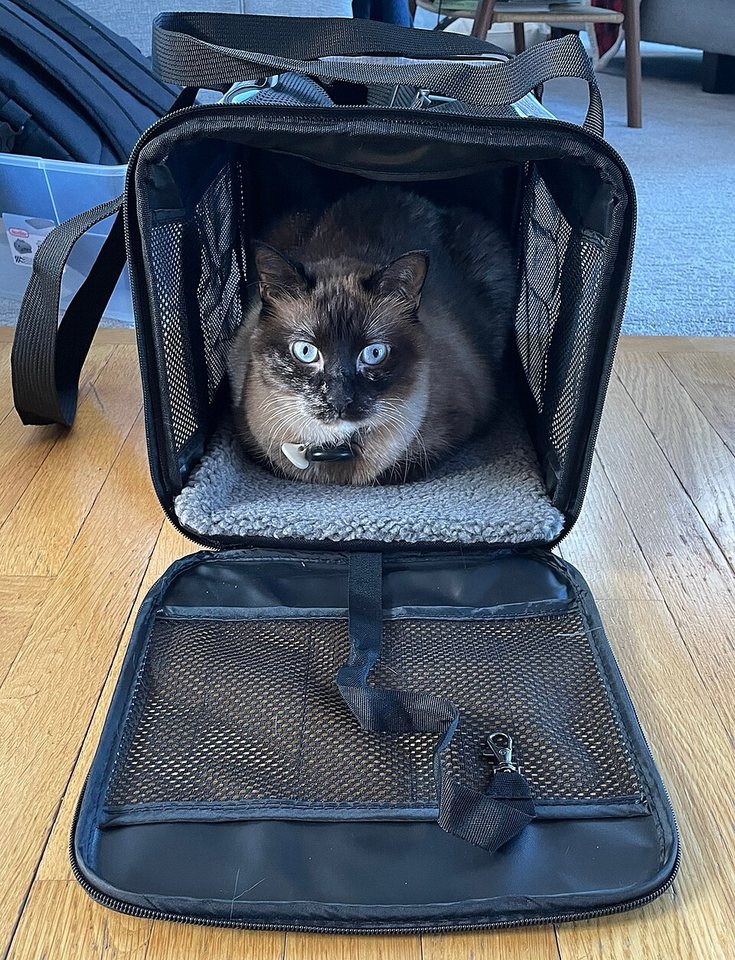

Measure the opening and the space behind it
Measure the shelf or closet before you compare carriers. Write down the clear width, depth and height where the carrier would sit. Then measure the opening you’ll slide it through. A door frame, hinge or lip at the front of a shelf can leave you with less room at the opening than you have inside.
Decide which end of the carrier will face out. If you’ll slide it in sideways, compare the long side with the space it will actually occupy. Leave room to get your hand around the handle and pull it back out.
Write down two sets of outside measurements
For the exact model and size you’re looking at, record the length, width and height of the carrier when it’s set up. Use the exterior measurements. The inside measurements leave out the walls and won’t tell you how much shelf space to set aside.
If the maker gives a separate folded size, record all three folded dimensions as well. A folded carrier can take up less height without taking up less shelf space from front to back. If you already own the carrier, measure it in the position you’ll store it. Include any handle or base that sticks out. If the folded size is missing and you can’t measure it, leave it blank rather than guessing.
Check the weight of the empty carrier
Look for the weight of the carrier itself. Note which parts are included, especially if you’ll leave a strap or panel attached. If you have the carrier and want a number for your own setup, take everything out of the pockets and weigh it with the parts you plan to leave on.
For example, Sleepypod lists the Air at 4 pounds, 4.5 pounds with the privacy shield and 4.9 pounds with the shield and shoulder strap. Its listed exterior is 16 to 22 inches long, 10.5 inches wide and 10.5 inches high. That length range isn’t labeled as a folded storage size.
Keep the numbers together
Save one note with the model, its outside and folded dimensions, the empty weight and what was attached. Add the shelf measurements and the size of the opening. If you’re comparing two carriers, use the same units and label which set of measurements describes the way you’ll store each one.